Rental vehicle expenses help you understand fleet performance when tied to their correct positioning. Total revenue alone does not reveal what the car cost, and an uncategorized list of receipts does not explain why the result changed. Start by distinguishing the cost of a specific vehicle from the overhead and from the originally recorded maintenance cost.
What is lost when all expenses are added up in one number?
A decrease in the score of a branch or vehicle may appear without the team knowing whether it is due to a major repair, overhead cost, or duplicate registration. Detailing the expenses does not mean complicating the work; Rather, save the data you need when reviewing: date, amount, classification, entity or description, and vehicle or branch when linked to them.
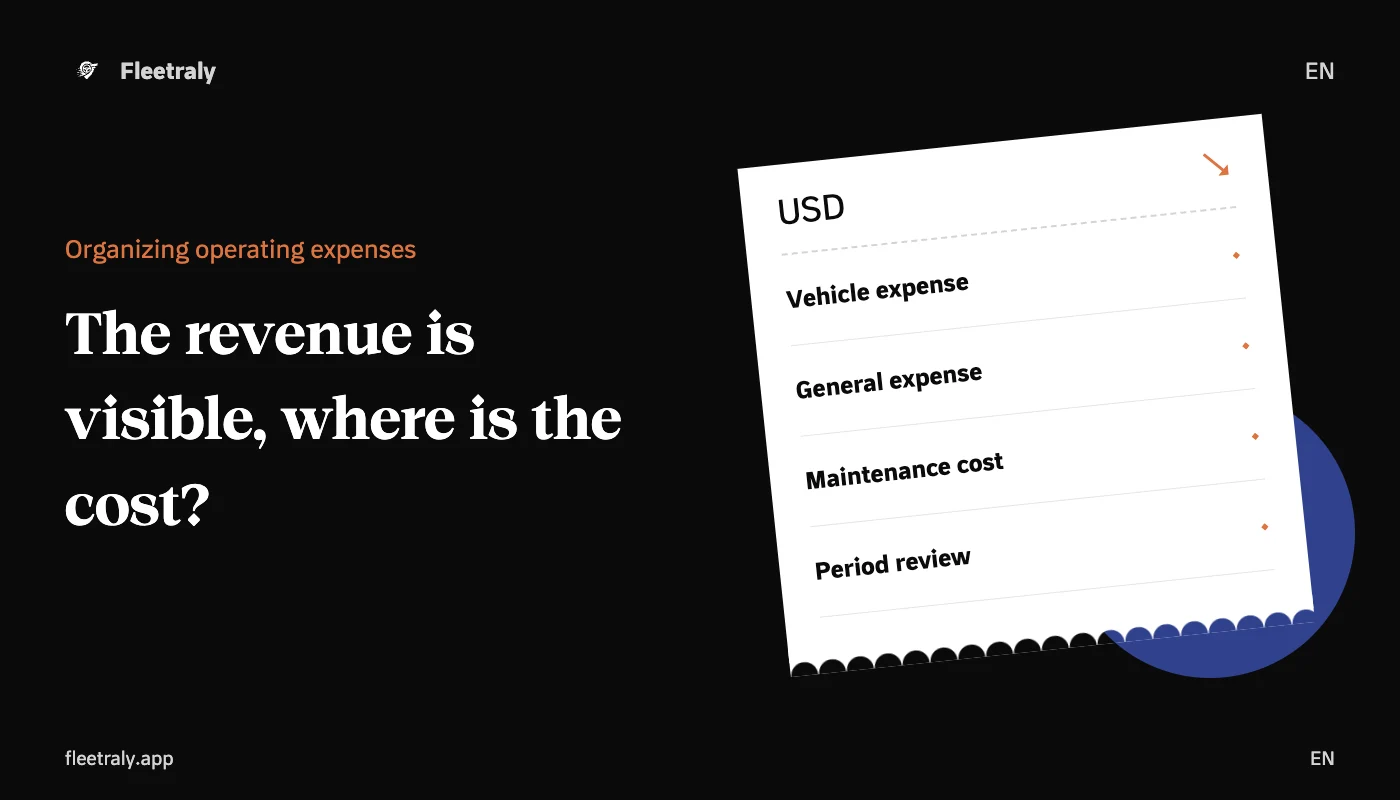
Divide the expense according to its relationship to operation
| Link type | Review method |
|---|---|
| Specific vehicle | Link the cost to the correct car and then review it within the period. |
| General expense | Register it as general when it does not pertain to a specific vehicle. |
| Branch | Review the cost-related branch instead of assuming it is the input branch. |
| Maintenance | First check whether the cost is saved in a work order. |
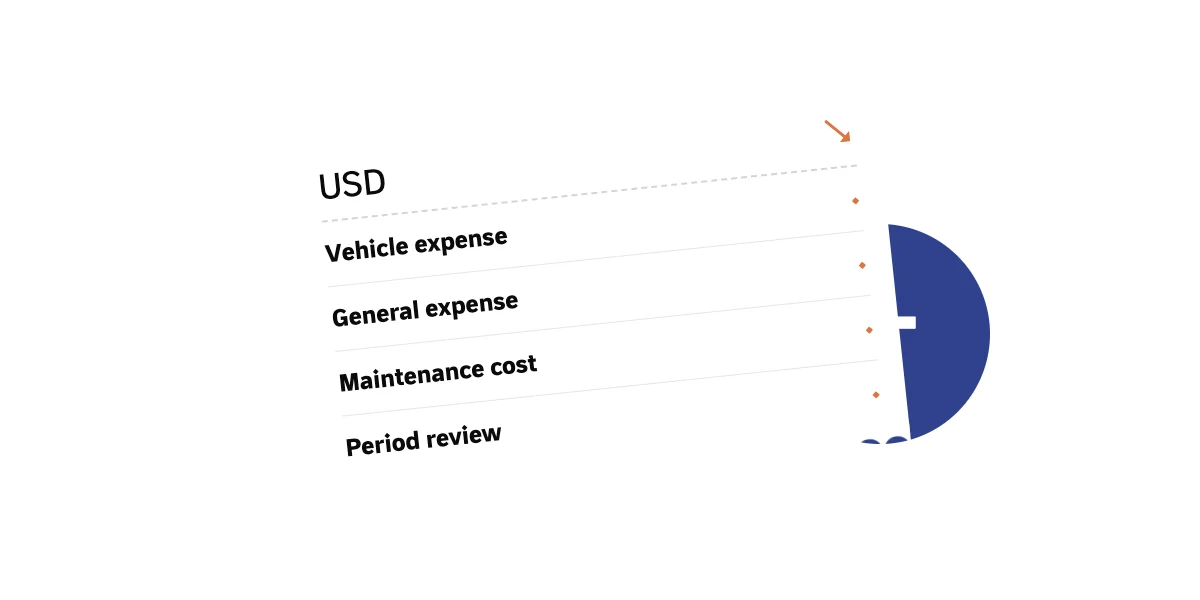
In Fleetraly, you can record paid expenses and link them to the vehicle or keep them public, with classification, attachments and tracking available. This makes the reference searchable rather than going back to photos of receipts distributed among employees' phones.
Maintenance cost: Pay attention to duplication
Costs for completed maintenance work are automatically entered into Fleetraly's profitability reports. So don't record a cost on a work order as another expense just because there's a new receipt for it. Check the source first, and record in expenses what is not already saved on the maintenance order according to the approved procedure.
Re-recording the process makes the cost seem higher than it is, and may lead you to incorrectly interpret the vehicle's performance. Before saving, search by date, amount, vehicle and description and review any history close to the transaction at hand.
What makes an expense description useful?
- It should explain what was paid for, rather than a general statement that does not explain the process.
- To be associated with the correct vehicle when it is specific to it.
- The appropriate receipt or document must be kept in its approved location.
- Use the correct date and classification instead of default values that have not been reviewed.
Read the report within its limits
Match the definition of revenue, costs, and period in the report you use before calling the output final profit. There may be costs or adjustments that are outside the scope of the report or outside the period. The purpose of this operational review is to understand what the number contains, and then complete the approved accounting review of your company when needed.
A repeatable, periodic audit trail
- Select the period and vehicle or branch you want to understand.
- Review missing general and direct expenses and attachments.
- Match maintenance costs to completed work orders.
- Check for unusual or recurring values before deciding on a vehicle.
Start with a cost that you can trace back to where it came from
Prepare your vehicles in Fleetraly and record a correct expense with its description and receipt, then see how it appears when you choose a vehicle and period. When your colleague can get to the source and understand the classification, you will have experienced the organizational value you need before expanding follow-up to the entire fleet.
Links to help you get started
Organizing maintenance plans and work